


History
CompanyHistory1990 – 1999

In motion

Rooted in the region, acting globally

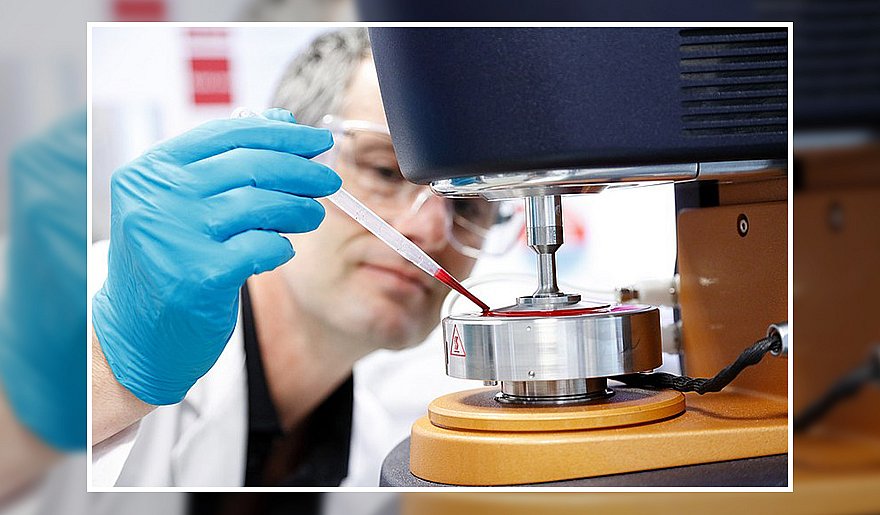
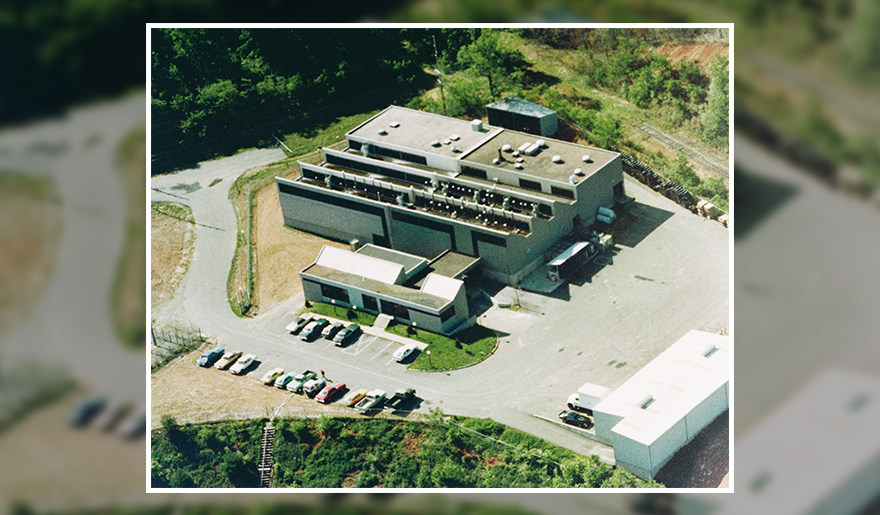
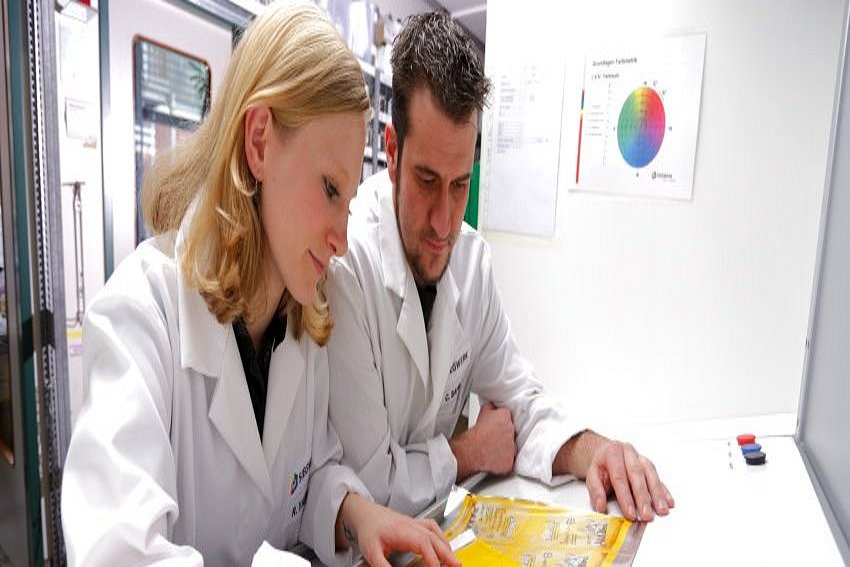
Core – The heart of the Siegburg plant is in the laboratorium for application technology.

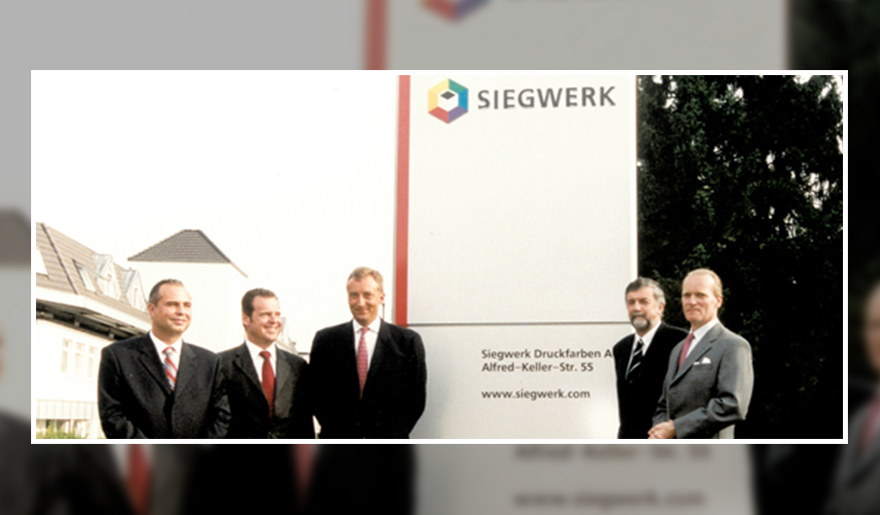
The collapse of the communist regimes in Central and Eastern Europe in 1989/90 and the associated economic opening of those regions spelled new impetus for the ink market. Very quickly, West German publishers and packaging printers entered the markets in Central and Eastern Europe – and the printing ink manufacturers accompanied them. In this situation, Dr. Klaus Stammen decided to expand production and sales in Siegburg.

More than 100 chemists, engineers, technicians and laboratory assistants were active in the research centre’s five laboratories at the beginning of the 1990’s. Additionally, there were two experimental printing areas with printing machines and equipment for specimen printing. Research and development was customer-oriented: experiments and colour-proofing pertaining to all printing methods were dailyroutine. From Siegburg, customers in Central and Eastern Europe could not only be served, but also received comprehensive service offerings.

The East on the move

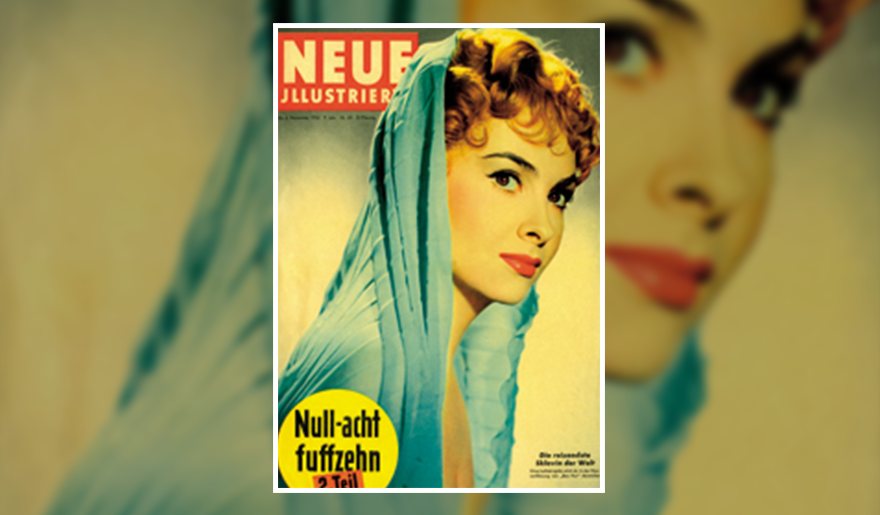
Sales boom – After the end of communism in East Germany, offset benefited from the newspaper boom in the five new states of the Federal Republic..
Shortly after the fall of the Iron Curtain, West German publishers set about satisfying the demand for information and entertainment in East Germany and – in a second step – in Eastern Europe. On the one hand, the publishing houses took over existing East German newspapers. On the other, they introduced new ones. As early as 1990, Burda and Gong cooperated to launch “Super-Illu”, a tabloid paper specially geared to the East German market. The publishing house Axel Springer launched sales of the magazine “Auto-Bild” in the Czech and Slovak Republics in 1991. In the same year, Bauer published the first Polish-language edition of the teenager magazine “Bravo”. The success of the West German publishers was big enough to merit new printing plants. For instance, Springer opened new offset facilities in Berlin in 1993, and in the same year the foundation for an offset printing plant was laid by Bauer in Barleben near Magdeburg. In 1996, Gruner & Jahr launched new publication gravure facilities in Dresden, followed by a newspaper printing facility two years later.

Changes in US business

In the USA, cooperation with the German-American printing company Meredith-Burda Inc. ended in at the beginning of the 1990’s. The market situation in the USA had already been very tense in the early 1980’s. Mergers and acquisitions were the sign of the times. Whereas there were 12 gravure companies with 31 sites in the print sector in 1981, that figure had decreased to eight companies with 30 factories by the beginning of the 1990’s. In this situation, Meredith and Burda sold their 40 percent stake in Siegwerk Inc. to the printing corporation Donnelly in 1990. The stake went to Siegwerk itself in the summer of 2002.

In 1990, Siegwerk received the assignment to supply packaging inks for the internationally active packaging printing company Nordenia, which had established facilities in Jackson, Missouri, two years previously. To deliver the inks to Jackson punctually, Siegwerk established interim storage facilities in the USA. Additionally, staff exerted themselves to look after the needs of the Nordenia printers in the USA. When key problems occurred, Siegwerk specialists flew to Jackson to find solutions on site.

Precision and effect – energy curing inks and seal laquer in packaging printing

At the beginning of the 1990’s, packaging printing was a booming industry globally, not only in the USA. In this field, more and more inks and varnishes with binders that combine under ultra-violet radiation were being used – so-called UV inks. The respective ink film boasts very good fastness properties and excellent chemical, thermal and mechanical durability after setting. At the same time, the inks do not pile on screen rollers, printing blocks or machine parts as long as they are not subjected to UV radiation. UV inks offer excellent runability in continuous-tone printing and some other areas, along with advantages for further processing of the printed matter.

Aromatic inks and varnishes
Siegwerk refined the principle used to blend scents into printing ink. In the early 1990’s, an aromatic ink series later to be called “Aromit” was produced. As early as the late 1950’s, magazine publishers and packaging producers had shown an interest in the aromas of vanilla, chocolate, bakery products or sausage. At the time, however, the risk that neither ink nor scent would be consistent was too high. A consistent, optically pleasing and nose-friendly product only became possible with the technology of micro-capsulation.

The Aromit aromatic varnishes hardly smell of anything when freshly applied. The aromatic oils are only released when the varnished surface is rubbed under light pressure, which crushes the microcapsules. The scent is not only assumed by the print carrier. Some of the oil is also transferred to the skin, so that the individual inter-action typical of perfume oils is triggered. Aromatic varnishes can be applied directly via web offset or as dispersion varnishes. Aromit-scented inks are used in newspaper printing. This either involves printing a four-colour motif using the aromatic inks, or blending the aroma capsules in a special ink for a mono-coloured picture in newspaper printing and other areas. In both cases, strong aromas like banana, rose, cinnamon and pine have proven effective. It is also possible to apply certain perfumes to the paper or other substrates.

HOTTECH – Inks of the future

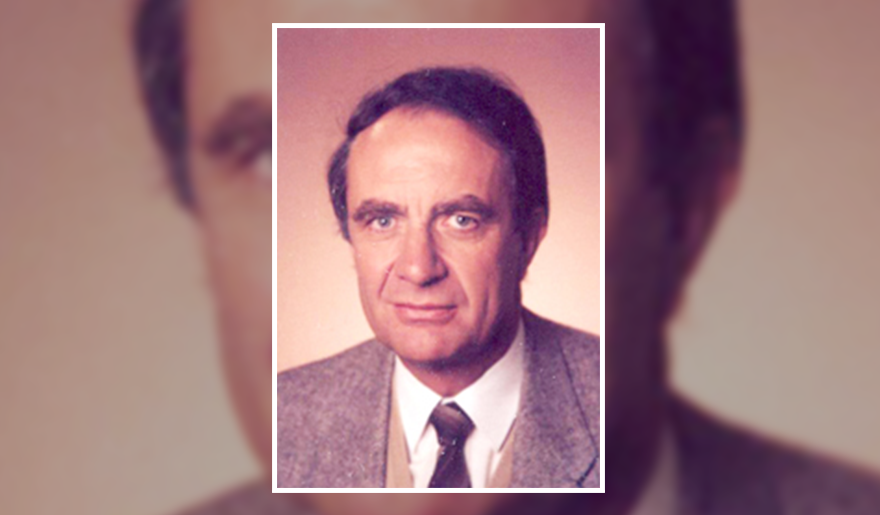
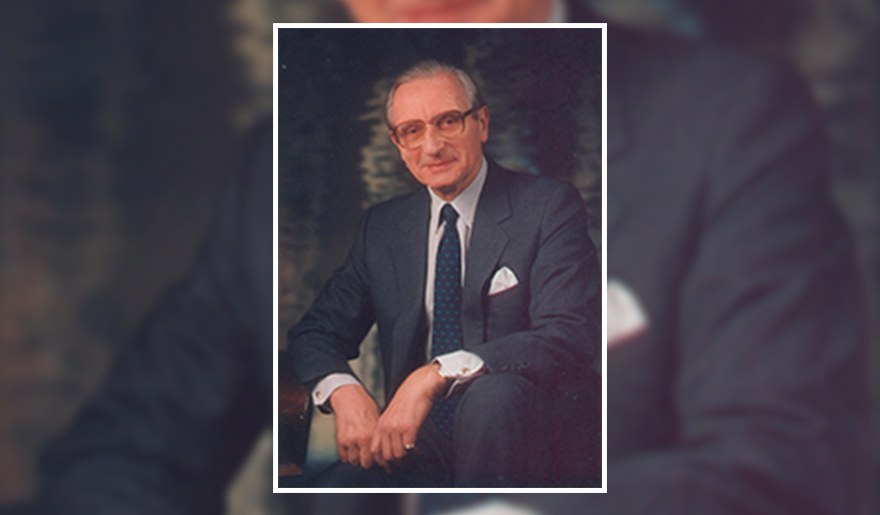
Dr. Rudolf Griebel – The physico-chemist is the developer of Hottech, a solvent-free ink system for gravure.

In the mid 1990’s, Siegwerk developed a solvent-free ink system and a printing method that employed it for publication gravure. This technology was given the brand name Hottech. In contrast to conventional inks, which are liquid due to the solvents involved, a Hottech ink is a granulate or powder that only assumes the very low viscosity needed for gravure purposes under the influence of warmth. Along with stability of the granulate in storage, Hottech ink features the environment-friendliness of totally solvent-free ink application and is free of volatile organic compounds (VOC). Additionally, the system offers viscosity control via simple temperature adjustment, which eliminates the usual complex balancing between pigment concentration, solvent-volume and let-down varnishes viscosity control during printing. From the machine-technology point of view, advantages include the fact that machine parts dedicated to ink-drying on the carriers and elaborate recycling of solvents become superfluous. Also, the energy invested here can be saved. The energy-saving effect of the Hottech process is significant compared to publication gravure with liquid inks. In fruitful cooperation with KBA in Frankenthal (Germany), the Hottech gravure method was made ready for four-colour printing on fast publication gravure machines.

Another Hottech printing method, which could be described as a digital flatbed printing procedure, was also conceived in Siegburg and revealed in patent documents, like other developments. A cooperation deal with the Heidelberger Druckmaschinen AG was dedicated to making this method ready for the market.

Rising prices for the raw materials needed to synthesise Hottech ink systems in the late 1990’s meant that the new ink system was not yet able to replace toluene systems in a cost-efficient way, a fact which postponed the market launch.

Contentmargin