


History
CompanyHistory1906 – 1918

The technology of colours

First successes

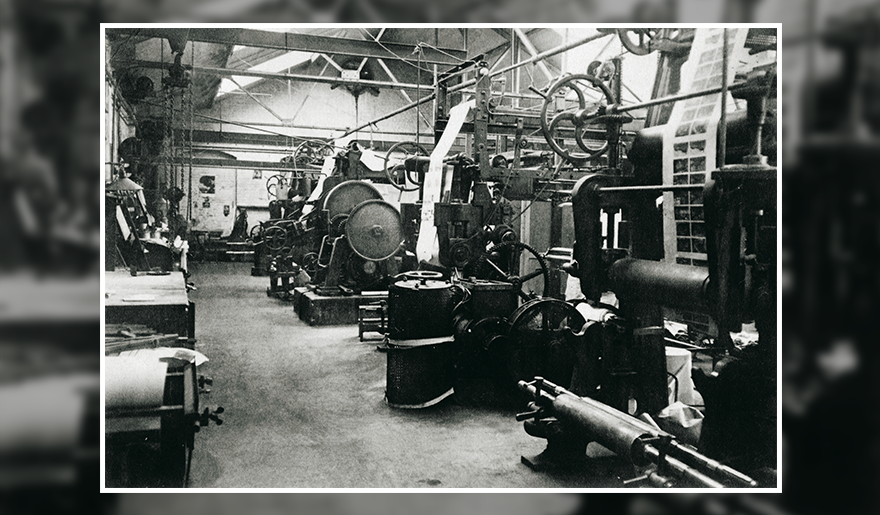
Printing Shop – The prints of Deutsche Photogravur AG were created here, swiftly earning a reputed name for the Siegburg company.

From the very beginning, Deutsche Photogravur AG concentrated on illustration printing. The driving force was Ernst Rolffs. He saw the biggest opportunities for gravure in “artistic paper printing”, since it was possible to produce prints of all kinds of pictures that were true to the original mass. The success of the “Rembrandt Intaglio Printing Company”, founded in English Lancaster in 1895, had shown that there was a large market for such prints. The interest of people at the time was enormous: photographs and reproductions of artwork sold exceedingly well. Illustrated magazines published in large cities like Berlin, Hamburg, Cologne and Munich soon incorporated photos and developed into mass publications with a circulation of millions by the beginning of the 20th century.

The swift success of the Deutsche Photogravur AG confirmed Ernst Rolffs in his beliefs. The first black-and-white products from Siegburg sold so well, that a rotary machine for three-colour gravure was bought as early as 1907. In that year, Eduard Mertens turned to the development of a gravure procedure for newspapers in his Mannheim firm while Ernst Rolffs focussed on expanding the commercial printing business in Siegburg. In the following years, the company produced representative books for large towns like Berlin, Munich and Cologne, along with impressive anniversary albums for corporations like Krupp. Industry soon recognised the advertising potential of gravure and had high-quality catalogues and posters produced in Siegburg.

Deutsche Photogravur gained a high reputation for its photo and art reproductions. As early as 1908, accurate reproductions of photographs appeared in “Eders Jahrbuch der Photographie” (Eder’s Annual of Photography). Soon after the launch of the company, Rolffs contacted museums all over Europe and acquired photographs of work by Rembrandt, Rubens, Tizian and other important painters. Deutsche Photogravur produced reproductions of those pictures in high quantities and thus helped to make classic works of art more well-known. The firm also produced representative picture albums like “Deutsche Kunst in Brüssel 1910” (German Art in Brussels 1910), which Emperor Wilhelm II received on the occasion of his visit to the Brussels World Expo.

Solutions for gravure

To achieve this quality, Ernst Rolffs and his staff had to solve a number of technological problems. Both suitable machines and gravure-compatible inks were lacking. Conventional inks for books were not suitable for gravure on fast-running machines. They were not thin enough, did not transfer to the paper easily and dried too slowly. This problem led to significant discrepancies between the original picture and the first multi-coloured art print marketed by Photogravur. Since better inks were not available on the market, Rolffs charged his closest aides – Dr. Ernst Nefgen and Dr. Karl Bleibtreu – with the development of suitable gravure inks.

Although this was new territory, the two chemists were able to tap the experiences they had made developing gravure inks for textile printing in Kattunfabrik’s chemical laboratory. Additionally, they still liaised closely with the nearby laboratory – continuing a cooperation that had already benefited Ernst Rolffs during the development of his photochemical engraving method.

Text and pictures – Arround 1910, Rotophot GmbH Berlin implemented a procedure developed in Siegburg, allowing text and pictures to be transferred to the rollers simulaneously.

Deutsche Photogravur did not just enhance paper printing by developing suitable inks, but also the fields of machine design and engraving technique. For example, August Nefgen and the machine factory Geisenheim jointly built a face and back printing machine, which was used from 1911. In the same year, Nefgen registered a patent for a combined picture and text solution which allowed simultaneous application of pictures and text to a copper roller. This so-called “roto-engraving” enabled a new quality of printing for newspapers and magazines. Along with a Berlin company working with a similar method, the “Rotophot GmbH”, Photogravur founded the “Roto-Gravur Gesellschaft Berlin-Siegburg” in 1911, its goal being to tap joint patents in the field of roto-engraving.

The „Internationale Tiefdruck GmbH“ – A Milestone in printing history

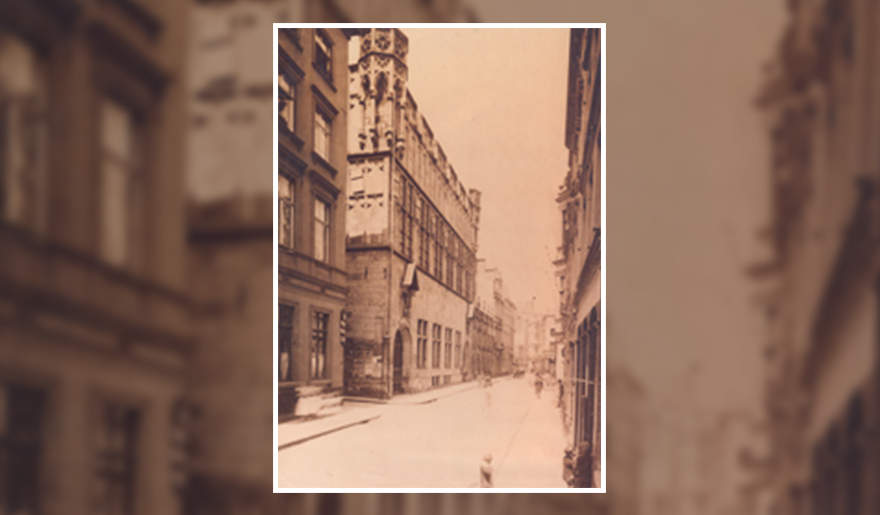
Representative – Big cities like Cologne took the opportunity of presenting themselves via photoreproductions from Deutsche Photogravur.

Ernst Rolffs and Eduard Mertens crossed each other’s paths again due to the development of roto-engraving. Mertens had left Photogravur in 1907 since – other than Rolffs – he was interested in newspaper rather than illustration printing. In his Mannheim firm, he successfully developed machines for rotary printing of newspapers. In 1910, his machines were used to print the Easter edition of the “Freiburger Zeitung” – featuring gravure-printed pictures for the first time, whereas the text was set conventionally in letterpress.

Interest in the routine use of gravure in the newspaper segment was intense – and not only in Germany. Merten’s rotary procedure and Nefgen’s roto-engraving were milestones on the path to high-quality pictures in newspapers and magazines. That was reason enough for Ernst Rolffs and Eduard Mertens to contemplate renewed cooperation. The purpose was joint licensing of their procedures to machine manufacturers and printing firms. To achieve this, they founded the “Internationale Tiefdruck GmbH” in 1912, in which Rotophot GmbH also held a stake. Distribution subsidiaries quickly followed in Amsterdam, Stockholm and New York.

Inks for the future – The “Siegwerk Chemisches Laboratorium GmbH”

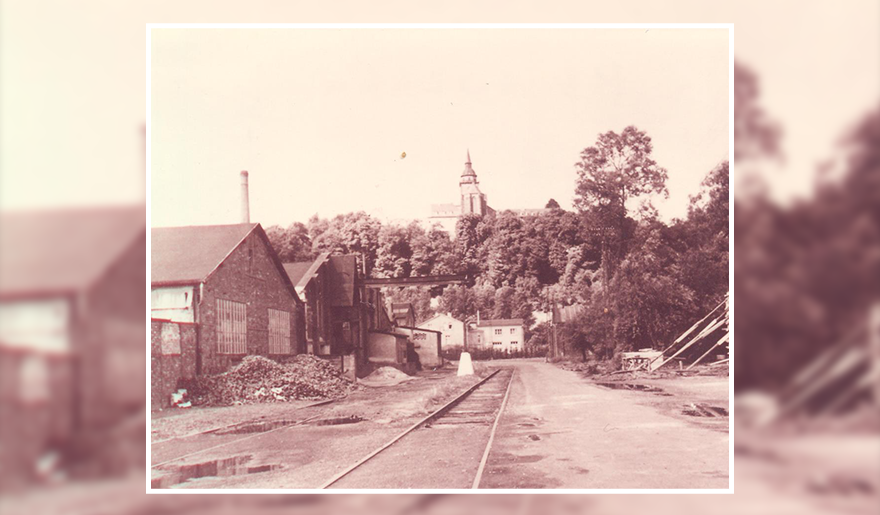
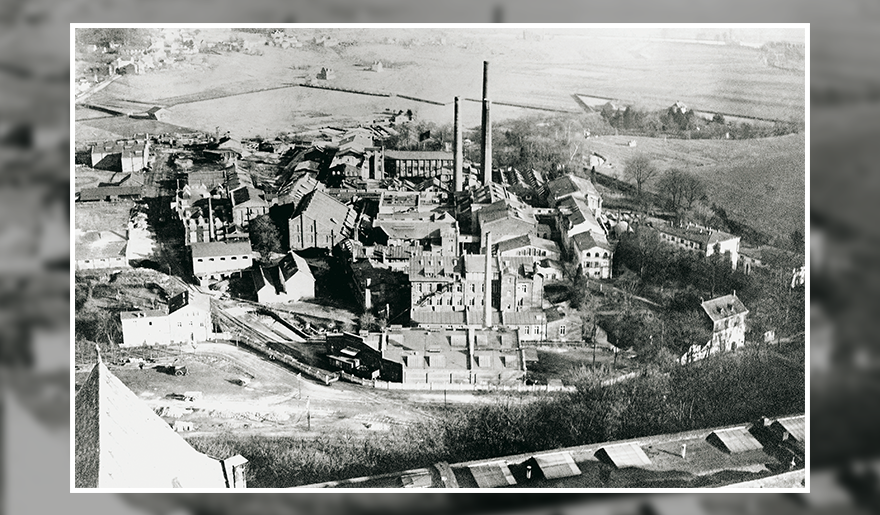
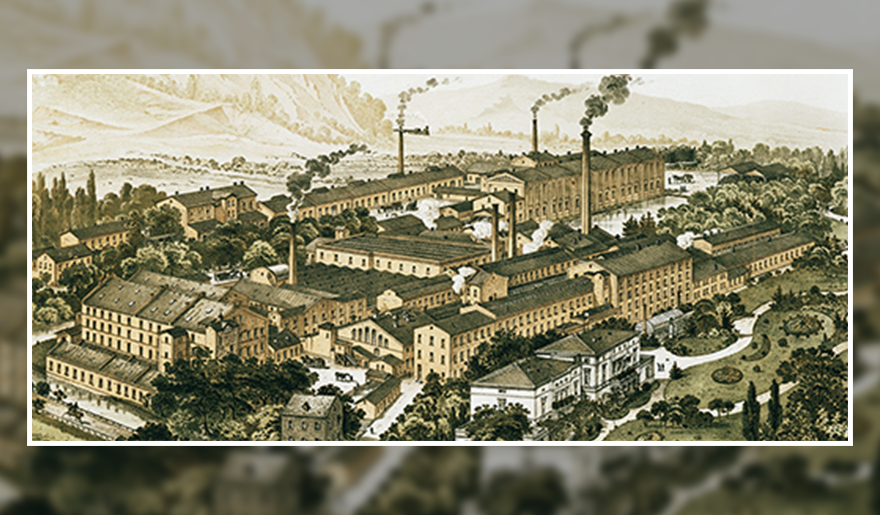
View of factory – Prior to WWI, calico fabrics, inks and pictures were produced in one location.

The success of gravure in magazine and newspaper printing led to increased demand for suitable printing inks. Kattunfabrik’s laboratory had already gathered relevant experience in its cooperation with Photogravur, and  turning this know-how into business was an obvious step. These considerations led to the launch of the “Siegwerk Chemisches Laboratorium GmbH” on February 21, 1911. One of the four partners was the head of Kattunfabrik’s chemical laboratory, Dr. Fritz Rung. Other shares were held by Alfred and Eugen Keller, along with Kattunfabrik itself. The goals of Siegwerk were diverse: not only inks, but other chemical products of all kinds were to be researched and developed.

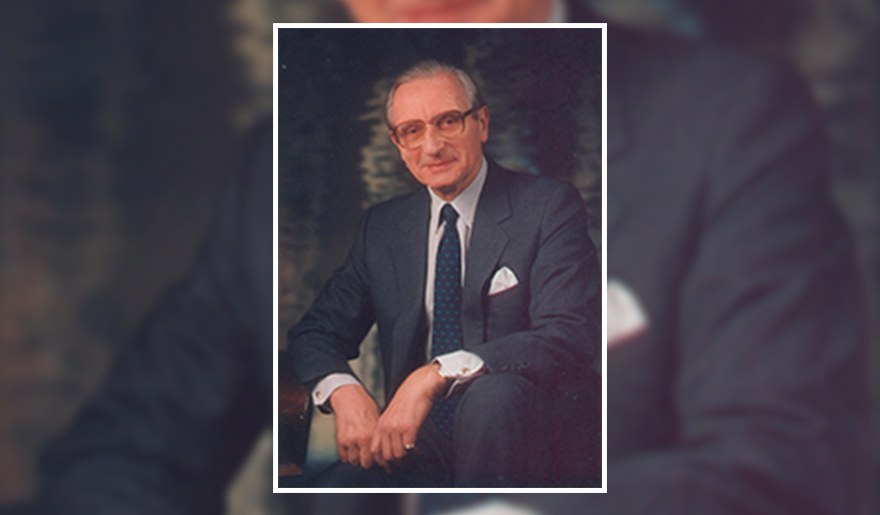
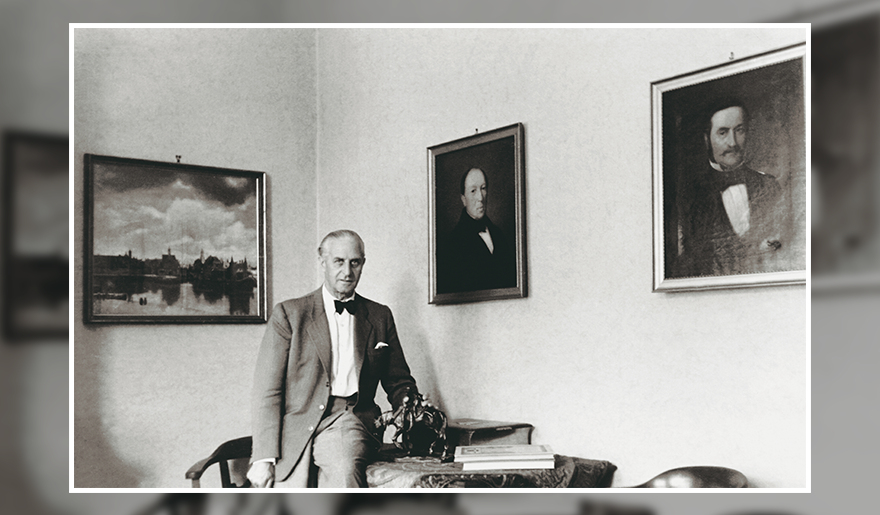
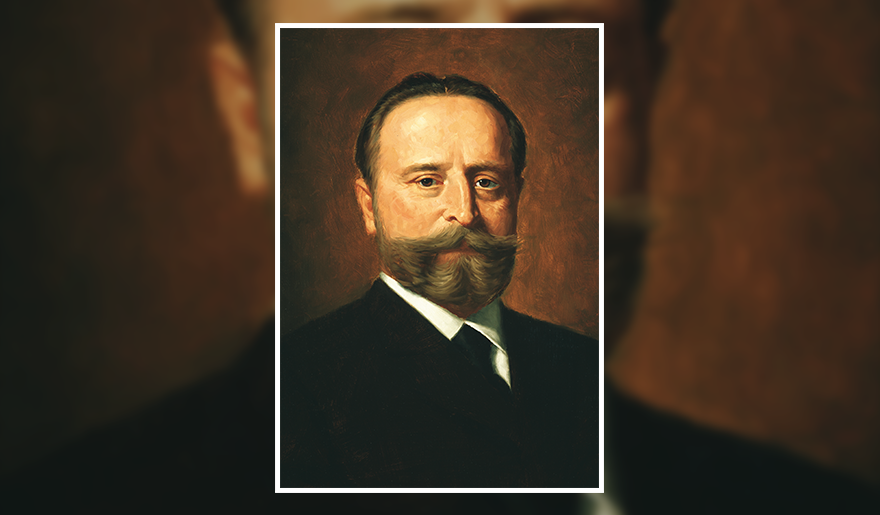
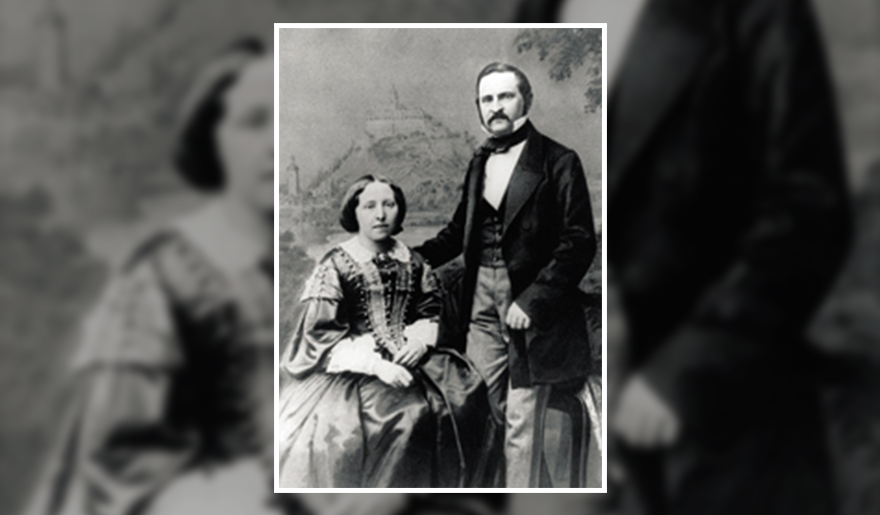
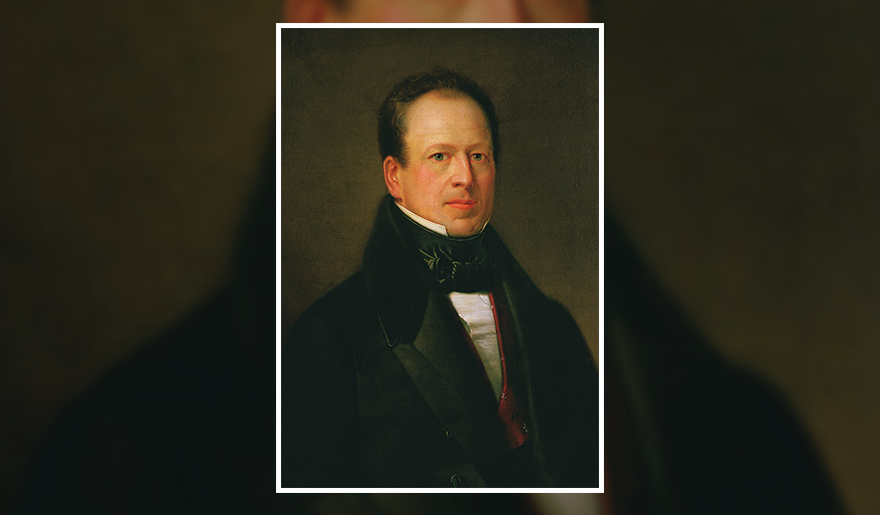
Entrepreneurial spirit – Alfred Keller recognised the potencial of the market for gravure inks and founded the “Siegwerk Chemiches Laboratorium GmbH” together with his son Alfred Keller II.

Kattunfabrik supported the new company in various ways. On the one hand, Siegwerk could use the existing infrastructure of the factory. A cooperation contract elaborated: “As far as possible, Kattunfabrik Siegfeld provides Siegwerk with electricity, steam or steam power and gas for a suitable fee, and allows it to use its railway connection and canals also for a suitable fee.”

On the other hand, Siegwerk profited from the fact that Kattunfabrik let its laboratory chief Dr. Fritz Rung work for both companies. The financial implications of that cooperation were agreed in writing: “Siegwerk is to compensate Kattunfabrik Siegfeld for an appropriate part of the salary Kattunfabrik Siegfeld pays Dr. F. Rung, the amount to be determined annually.” Registration and use of patents was settled in a separate contract between Rung, Siegwerk and Kattunfabrik. All involved were aware of the fact the new company’s success was largely dependent on Rung’s inventive talent.


Colourfast, Lightfast, Smudge-proof and Quick-drying –
Water-based Gravure inks

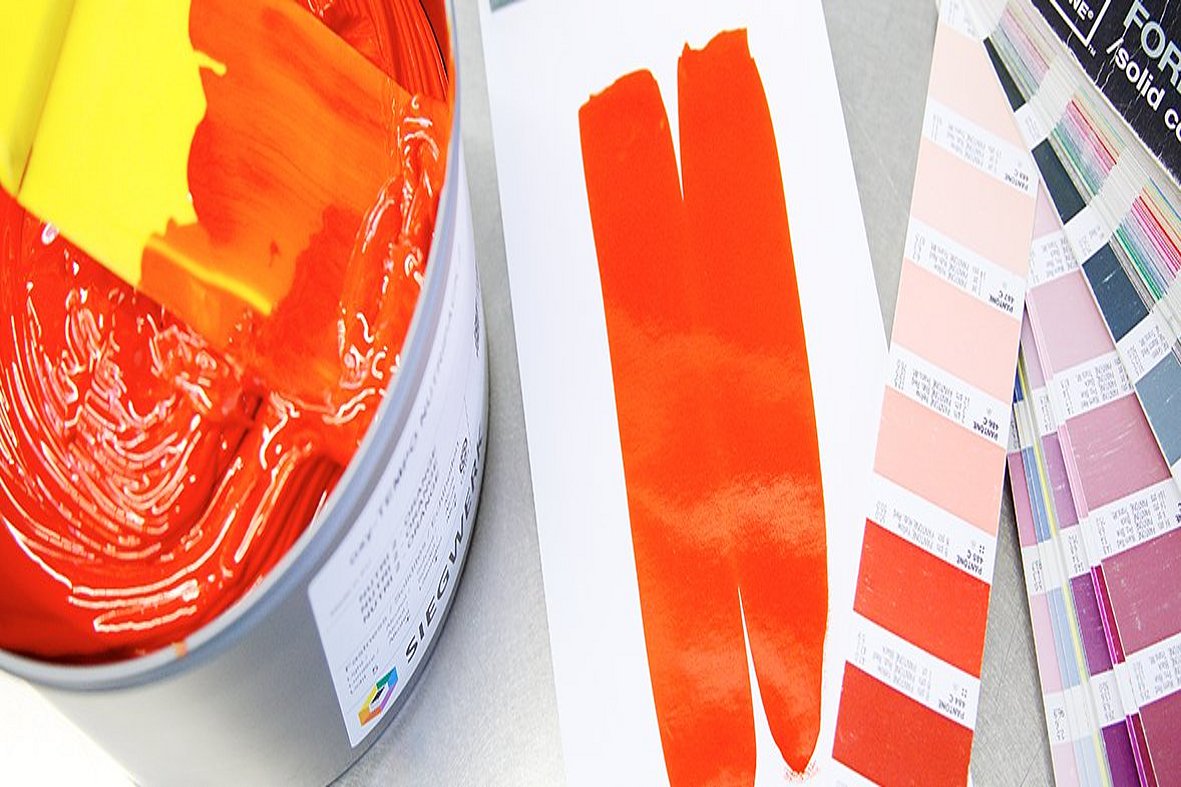
Dr. Fritz Rung developed many new products for Siegwerk, including solvent-besed gravure inks.

From the very beginning, Siegwerk aimed to optimise the physical, chemical and print-technological properties of gravure inks. Colorants, binders, solvents and other necessary substances needed to be balanced in such a way that printing, drying and further processing could take place back-to-back without significant loss of time.

In the beginning, Siegwerk produced water-based inks using resin soaps as binders and alcohol as a solvent. However, these required a very sure instinct from printers when setting their machines. If the impression cylinders rotated too fast, the inks began to froth. But the addition of alcohol caused a loss in consistency. Apart from that, these early water-based inks were not sufficiently smudge-proof and dried too slowly.

Rung and his staff therefore experimented with shellac, a natural resin substance, as a binder and with the mineral borax, dissolved in water or glycerine. The water-based inks thus developed could be used for gravure without problems and facilitated impressive multi-colour prints. With these, Deutsche Photogravur AG produced first-class art prints, even though some of the machinery was still very simple.

Oil-based inks for packaging printing

A further innovation generated by cooperation with Photogravur was the development of oil-based inks for gravure. Photogravur had an assignment to produce a million packaging units for margarine – a product demanding very high fat and abrasion resistance from printing inks. However, there was no convincing solution for this problem at the time. Deutsche Photogravur AG therefore gave Siegwerk the task of producing suitable inks.

Dr. Fritz Rung had already experimented with hydrocarbons in 1905. In the laboratories of universities and chemical companies, tar was a popular raw material - because substances based on tar distillates can be used to produce inks. Based on Rung’s experiments, Siegwerk’s laboratory developed gravure inks using the solvents xylene and toluene. The latter were extracted from crude oil and were later even produced on Kattunfabrik’s premises, by the “Gesellschaft für Gas & Teer-Verwertung mbH”. These new toluene inks were not only used to print margarine packaging. They could also be employed in paper printing, boasting more brilliant colours, gloss and smoothness than water-based inks.  Along with innovation and high quality inks, Siegwerk placed especial emphasis on customer service from the very onset. “Rules for use of our water-based inks” and “Rules for use of oil-based gravure inks (rotary machine)” were publications that founded a tradition, which was later continued in the company’s “Technische Merkblätter” (technical bulletins).

Advertising and packaging
Progress in the field of printing methods and the development of advertising and packaging were closely linked. Advertising in public places had started when Ernst Litfaß put up his first advertising pillar in Berlin in 1855. And packaging was no invention of the 20th century, either. Chain stores had sold products like coffee and tea in standardised packaging since the 1880’s. What was new however, were the use of advertising plus a new development for paper packaging that was more colourful and of higher printing quality than formerly possible. The coffee firm Jacobs was one company to profit. In 1912, its packaging was only adorned by its trade mark (a coffee sack). But after 1918, high-quality packaging turned Jacobs coffee into a real brand product.

New products, new markets

Along with inks, the new gravure markets also needed chemical products for the preparation of print rollers. Here too, Siegwerk had the right answers. Among the recipes are formulae for cleansers and copper-plating baths, as well as guidelines for the production and testing of iron chloride solutions and a description of the chemical processes occurring during etching.

Siegwerk products soon found customers. In this respect, the company profited from the success of Deutsche Photogravur – whose subsidiary “Internationale Tiefdruck GmbH” contributed to the growing popularity of gravure at home and abroad, generating fast-growing demand for gravure inks and other chemicals needed for the printing process. Among the first licensees of the Internationale Tiefdruck GmbH were Germany’s “Sozietäts-Druckerei” in Frankfurt/Main – a customer to this day – and the publisher “Verlag Rudolf Mosse” in Berlin. The most prominent customers abroad were “La Photographure” in Paris and the “Illustrated London News”.

The danger of success – The end of Deutsche Photogravur AG

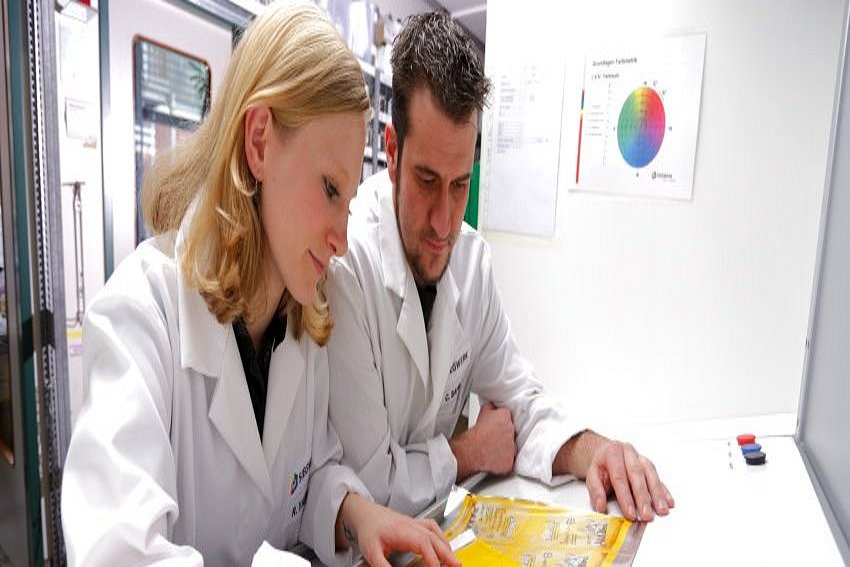
Clean work – Unlike the printers´ area, the repro department worked in a laboratory-like environment.

Deutsche Photogravur AG augmented its sale of licenses by offering three-month training courses, in which technicians of licensees learned the necessary expertise to implement gravure procedures. These courses took place in Siegburg, where Photogravur ran its own training facility from 1912 to 1914. With this facility, Deutsche Photogravur AG played a significant role in the growing popularity and professionalisation of gravure. In 1914, the company employed about 200 people and was at the height of its business development. But this success jeopardised the company’s existence. The dissemination of specialised knowledge strengthened competitors. The big printing houses with good ties to customers now also employed gravure technology and closed the market niche in which Photogravur had developed successfully. As a relatively small firm, it could not compete against these large companies. Additionally, specialised schools and the large printing corporations were providing training for gravure printers themselves.

The onset of World War I on August 1, 1914, aggravated Photogravur’s difficult economic situation, and business was closed down for the duration of the conflict. Attempts to revitalise production after the end of the war in 1918 failed. In October 1922, Deutsche Photogravur AG finally gave up and was dissolved.

The end of Kattunfabrik

Kattunfabrik suffered a similar fate. Even before the war, a new material was causing problems for the cotton-processing industry – artificial silk. Cotton fabrics had a tough time against this new low-maintenance industry product. Management reacted to the difficult market situation by expanding the product portfolio and modernising the organisation. In 1913, a kind of management consultant was employed, the accountant C.M.B. Oomen from Cologne. In July of that year, Oomen summarised his conclusions in a document called “Re-organisation of the plant”. Along with costing, logistics were a focal point of his suggestions for improvement.

The onset of the First World War frustrated management’s efforts to reorganise the company and adjust products to current tastes. Rationing of copper limited production of print rollers. Additionally, many employees were called up. Kattunfabrik was not regarded as a militarily important company, in contrast to two large munitions factories in the region – which lured away remaining staff with higher wages. Production had to be stopped on October 1, 1914. The last of the 750 employees had been dismissed in the preceding weeks.

War economy
On February 16, 1917, paragraph 1 of an official bulletin on printing inks said that “from March 1, 1917, whoever stores printing ink (especially commercial producers, distributors, printers and stock keepers) is obliged to report its quantities.” A few months later, on July 27, 1917, this rule was tightened in a new bulletin: “Whoever has printing ink must upon request sell it to the War Economy Office for the German Newspaper Industry in Berlin. The same obligation applies for users of printing ink with regard to substances used to dilute printing ink.” Information and propaganda in newspapers had top priority, so that other printed products – especially high-quality and lucrative multi-coloured items – could no longer be produced and sold.

Siegwerk asserts itself

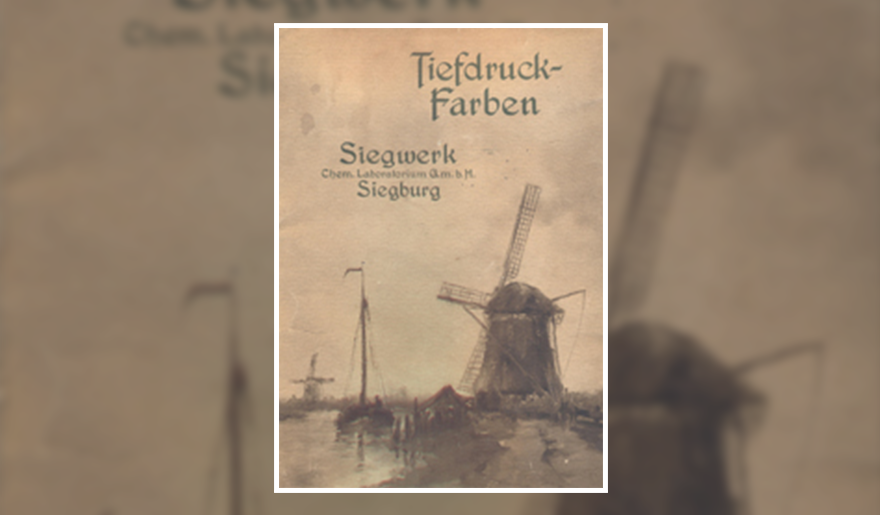
Service for specialists – From early on, Siegwerk summarised the most importent information for printers in its customer publications.

Siegwerk also had to struggle with the consequences of war. But demand and a market for printing inks remained intact, which set the company apart from Kattunfabrik and Photogravur. In this field, Siegwerk had established itself as a specialised producer within just a few years. This had been possible due to close cooperation with the Deutsche Photogravur AG, whose technological know-how Siegwerk put to use.

But it was not only specialisation in printing inks that prevented ruinous competition with the large German tar-based ink factories Bayer, BASF and Hoechst. Close links to Photogravur and its customers had facilitated the development of Siegwerk’s own distribution system. Equally important was the professionalisation of the laboratory in the days when it still belonged to Kattunfabrik. By keeping abreast with the latest scientific research, Siegwerk could procure preliminary products from the large chemical corporations and process them into new products in Siegburg. Oil-based inks were of fundamental importance in this: after 1918, they facilitated Siegwerk’s rise to one of the most important producers of gravure inks.

Contentmargin